Nowadays, CBD (cannabidiol) is booming and is a very popular topic of discussion. Cannabidiol is a non-psychoactive molecule extracted from cannabis that is enjoying growing success in various applications, particularly for its relaxing, anti-inflammatory, and analgesic properties. However, with this growing popularity comes the question of how its consumption affects screening tests, including CBD saliva test. We will explore this topic in greater depth to understand the implications for regular CBD users.
Detection of CBD in a saliva test
First, we need to clear up a common misconception about the relationship between THC (tetrahydrocannabinol), the psychoactive molecule found in cannabis, and CBD. Although both compounds are derived from the same plant, their effects and legal status are different: THC is illegal in many countries and causes undesirable psychoactive effects, while CBD is generally accepted because it does not cause a high and has many therapeutic properties.
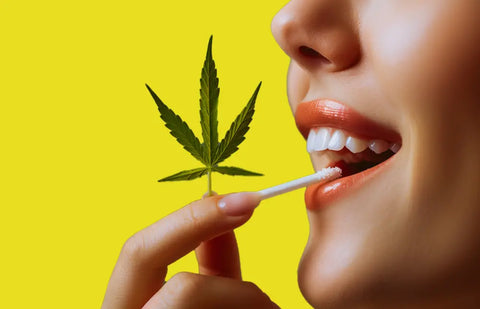
Nevertheless, some confusion remains surrounding cannabis screening tests.To be clear:aCBD saliva test is not designed to specifically detect cannabidiol, but rather the presence of THC and its main metabolite in the body. The tests are designed to identify recent cannabis use, generally within the previous 24 hours.
Cases where CBD can cause a false positive
Despite this reassuring information, it is important to mention that there are certain cases, albeit rare, where CBD consumption could lead to a false positive in a CBD saliva test. These are generally situations where:
- The consumed product contains traces of THC in quantities exceeding what is permitted or recommended (for example, more than 0.2% according to European legislation).
- The person consumed CBD contaminated with pesticides or other substances that could interfere with the tests.
- The individual used large amounts of concentrated CBD, which may have contained a significant level of THC.
However, it is important to note that these cases are relatively rare and depend heavily on the quality of the CBD products and the dosage ingested.
Scientific studies on the detection of CBD in saliva tests
Several studieshavebeen conducted to better understand the impact of CBD consumption on saliva tests. Here are some interesting findings to keep in mind:
The half-life of THC in saliva
A study published in 2019examinedthe presence of THC traces in saliva following the consumption of a single dose of concentrated CBD, with a THC level of less than 0.2%. The tests showed that the detected THC levels decreased rapidly in the first few hours after ingestion and reached a level below detection in about 12 hours. This suggests that even with occasional consumption of CBD products containing traces of THC, it is unlikely that a saliva test performed more than 12 hours after ingestion will be positive.
The pharmacokinetic profile of CBD
Another study conducted in 2018soughtto establish the pharmacokinetic profile of CBD, i.e., how this substance is absorbed, distributed, metabolized, and eliminated by the body. The results revealed that most CBD metabolites were undetectable in saliva even a few hours after absorption. In addition, this study confirmed that CBD metabolites are not linked to saliva-based cannabis screening tests, nor are they confused with those sought by these tests (THC and its metabolite).
How can false positives be avoided?
To reduce the risk of false positives during aCBD saliva test, here are a few tips:
- Check the origin and quality of CBD products consumed: choose recognized and reputable brands, check the THC content, and ensure that there are no contaminants.
- Ensure that the recommended dosages are followed and avoid excessively high concentrations of CBD.
- Avoid consuming CBD in the hours leading up to a scheduled or potential saliva test.
In conclusion, it appears that consuming CBD (in compliance with local and European regulations) presents a low risk of causing a positive result in a saliva test designed to detect cannabis. However, it is advisable to exercise caution and take the above factors into account to avoid any unpleasant surprises.