The growing interest inhemp-based products, particularly hashorCBDresin, has led many people to question how they are made. This product, derived fromhemp plants,isvalued for its many potential uses in the field of health and wellness. This article explores in detail howCBDhash is made, from the selection offlowerstothe extraction of resin.
The origin of hash: selection and preparation of hemp flowers
The first step in making CBD hash is choosing the righthempflowers. These flowers must be grown with care, without pesticides or harmful chemicals, to ensure the purity and quality of the final product. Once harvested, the flowers are dried and sometimes cured to improve their concentration of cannabinoids, terpenes, and flavonoids. This process directly influences the quality of the CBD hash.
Traditional and modern extraction methods
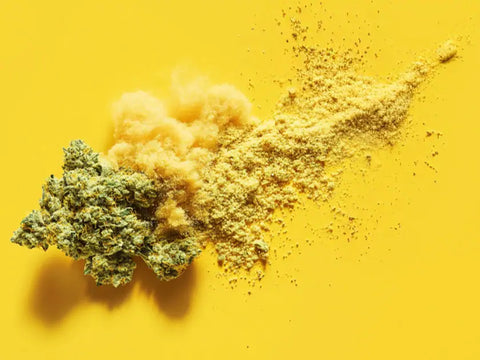
CBD hash producers use variousextractionmethodstoseparate the resin from other parts of the plant. Traditional techniques include:
- Dry sieving: The dried flowers are rubbed against a sieve or cloth to remove the trichomes containing the active substances.
- Ice water extraction: This method uses cold water and mechanical force to knock off the trichomes, which are then collected using bags with different mesh sizes.
Modern methods such as solvent extraction or supercritical CO2 extraction are also used to obtain a purer and more concentrated product, but they require professional and environmentally friendly equipment.
Refining the extracted resin
After extraction, the raw resin must be refined to remove any impurities and maximize the CBD concentration. The process may include steps such as filtration, decanting, and sometimes even re-dissolution followed by evaporation. At each stage, the goal is to remove contaminants while preserving the beneficial components of theresin.
Formulation and standardization of the final product
The CBD hash obtained is then tested to analyze its chemical composition and ensure that it complies with the quality and safety standards imposed by the competent authorities. The CBD dosage can be adjusted by adding isolates to achieve a consistent concentration, or through other processes that guarantee the consistency of the finished product. Care must be taken to ensure that each batch manufactured offers the same efficacy and reliability.
Space reserved for future innovations and developments
With the continuous evolution of technologies and regulations, methods for extracting and producing CBD hash will surely see further innovations. The constant search to optimize product purity and reduce production costs are key factors driving this industry. Adapting to new scientific discoveries and market demands also dictates the evolution of techniques and approaches in the manufacture of theseplant-based products.
This step-by-step exploration of the CBD hash manufacturing process demonstrates that the quality of the final product largely depends on the extraction and processing methods used, as well as the rigor of the tests performed. The sustainability of this segment of thehemp market will depend on its ability to adapt to changing legal and consumer standards.